SBD relevance
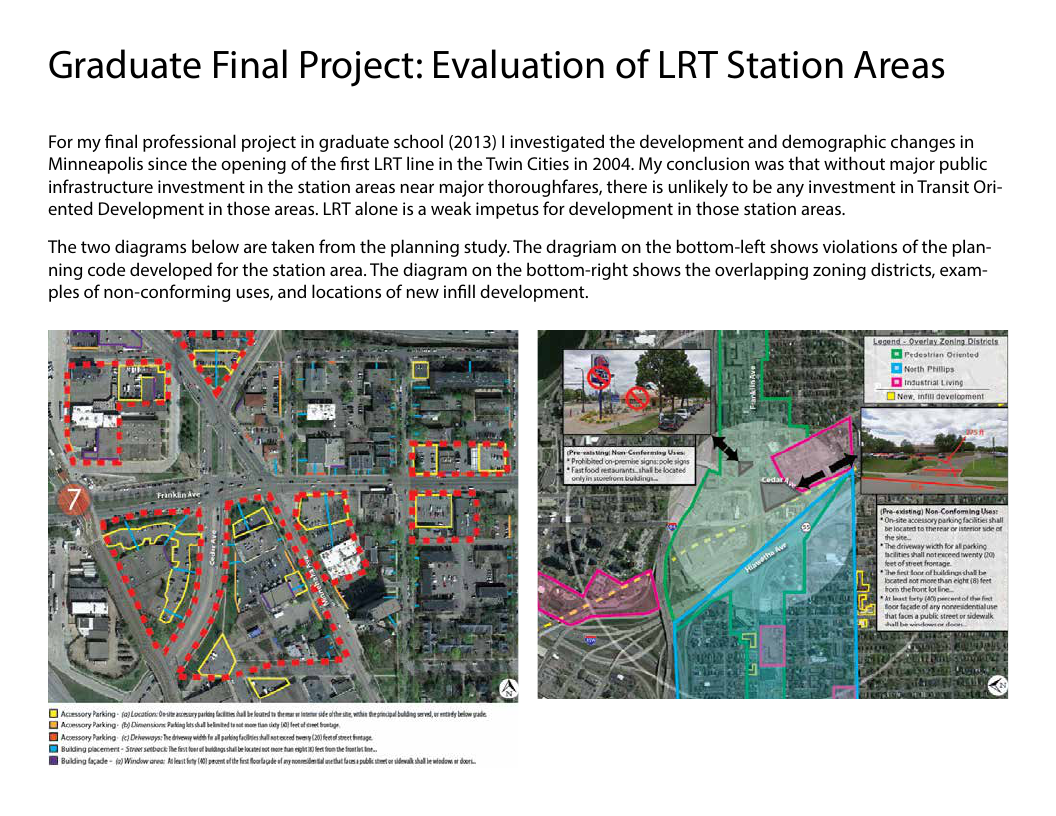
This study is an early version of the field logic behind sphere-based design: transit is not treated as a point feature, but as a layered condition of zoning, parcel readiness, pedestrian rules, investment timing, and public infrastructure. The later radial and tower-town work inherits this habit of reading development potential as overlapping systems rather than a single station buffer.
Planning lesson
The core finding was that light rail access alone was a weak development trigger where station areas lacked public realm investment and parcel transformation logic. For SBD, that becomes a rule of thumb: mobility geometry needs civic and spatial structure around it before it can become an urban form.