What the bug was
The original inferVacancyStatus function treated "no permit data in the search radius + ≥1 open CSR case" as a vacancy signal. that pattern describes magic castle (members club operating under existing permits, 1 unrelated CSR case, no LADBS permit pulls in the radius), and it also describes any quiet active commercial parcel. the fix moved vacancy inference into a dedicated module (scripts/HCM-1200/lib/vacancy.mjs) with 13 tdd tests, and tightened the rules: "no permit data" no longer fires vacancy on a single CSR case — it requires ≥3 open CSR cases or ≥8 code complaints, levels that genuinely indicate distress rather than active use.
What the fix changed
All 1295 HCMs were rescored after the rule change. 10 necessity verdicts moved: 2 from blocking-redevelopment to symbolic (magic castle and arthur s. bent house), 8 from failing-protection to symbolic (apartment buildings and residences that don't generate strong distress signals). the two remaining blocking-redevelopment cases (HCM-587 lincoln heights jail, HCM-790 belmont tunnel) survive the tighter rule on strong independent evidence — 12 code complaints and a manual override respectively.
Why the methodology demo stays
The false-positive flag has been fixed, but the rectilinear-vs-sphere design proposals below remain useful as a methodology demonstration. magic castle is the clearest case where the sphere form has a programmatic argument the rectilinear form lacks — the sphere is the right vocabulary for a magic-themed institution. the proposals are explicitly hypothetical; the actual recommendation for the site is unchanged: do not change it.
Design proposal — rectilinear form (hypothetical)
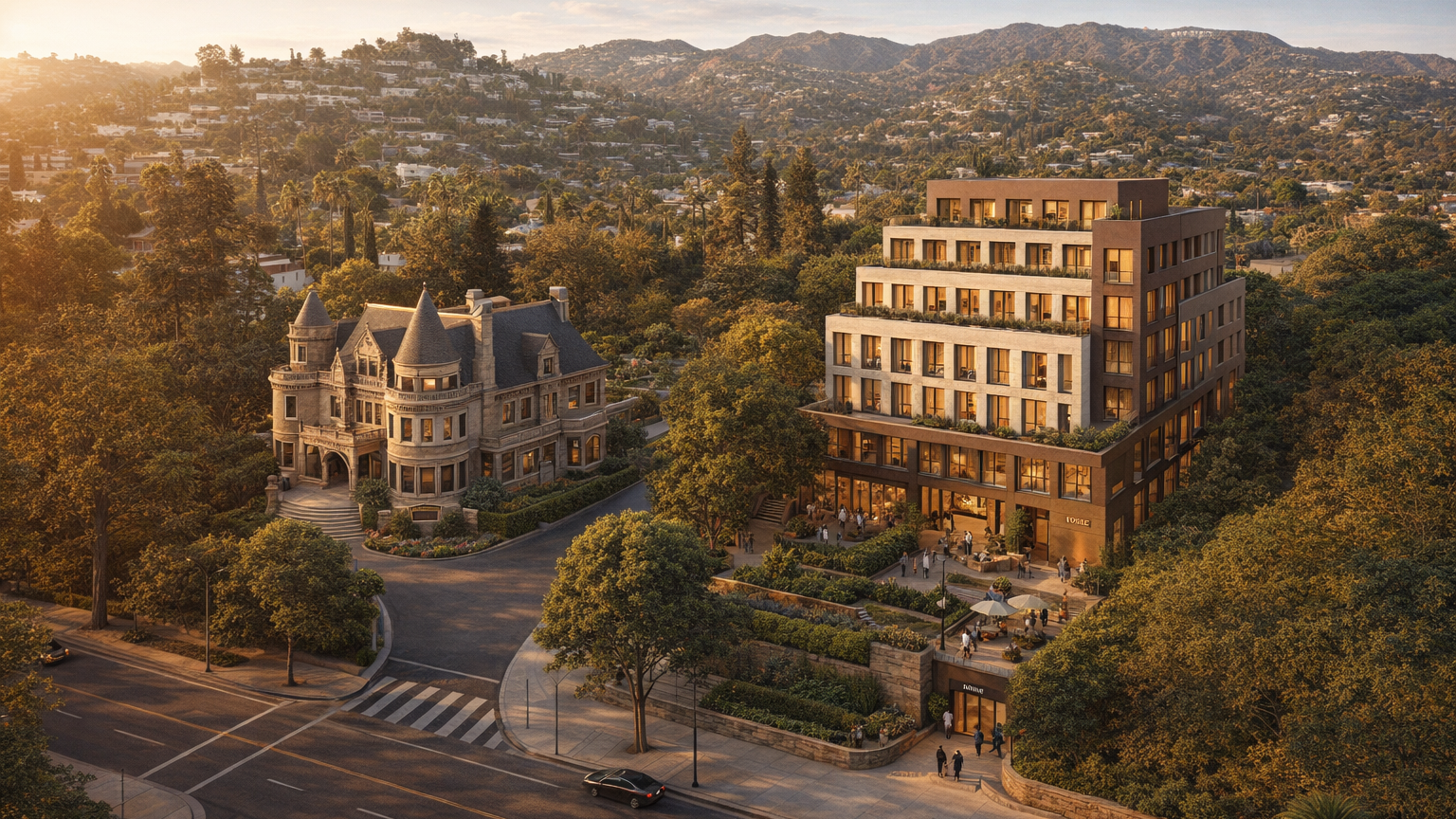
A 4-story boutique hotel addition in the rear garden, ~40 keys, retained lane mansion as the public-facing front of the property, gardens preserved on both flanks. ground floor of the addition: escape rooms, theater rehearsal, castle-adjacent retail. the addition is stepped back from the franklin avenue elevation so the mansion remains the legible street object. this is the standard adaptive-reuse playbook for a historic structure on a tourist-adjacent commercial parcel.
Design proposal — sphere-based form (hypothetical)
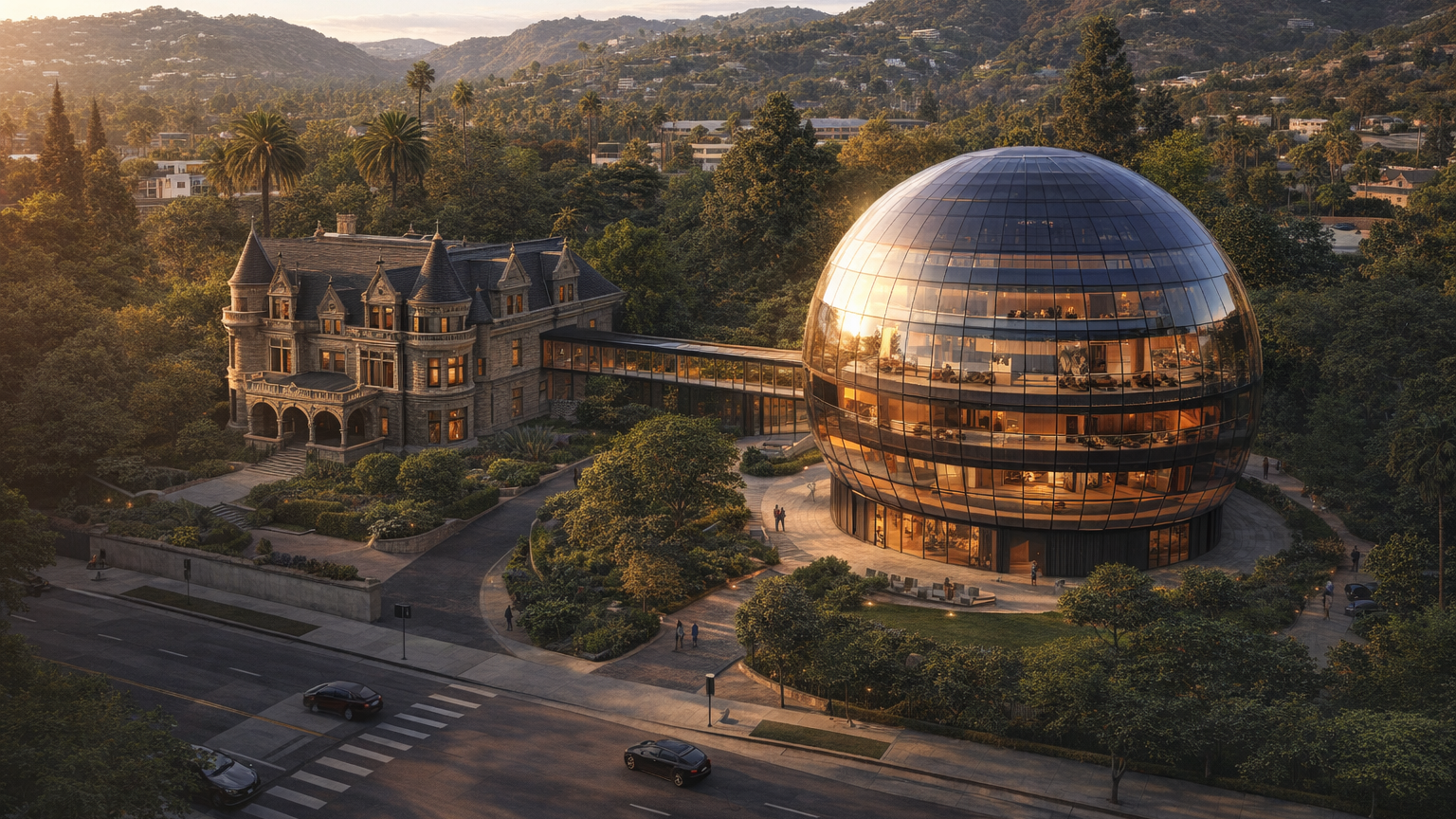
A single spherical pavilion in the rear garden — the bb-8 house at urban scale, roughly 80 ft in diameter, glass and wood shell, four internal levels. houses 8 castle private suites, a small black-box performance theater, and ground-floor retail. a glass corridor connects the mansion to the sphere. the form does work the rectilinear addition cannot: the sphere is the right vocabulary for a magic-themed institution. it reads as a piece of staged geometry — a hat, a crystal ball, a trick envelope — that completes the lane mansion as a fantasy estate. this is the "form is character, not just envelope" rule of sphere-based design at its clearest.
Comparison
The rectilinear proposal is more buildable, cheaper, and produces a more conventional preservation outcome. the sphere proposal would be a one-of-one architectural object closely matched to the castle's programmatic identity. for a normal historic property the rectilinear answer wins on cost and risk. for a magic club, the sphere proposal is the better answer for the same reason that disneyland's sleeping beauty castle is better than a regional convention center — the building should perform the program. neither should actually be built, because the castle is fine. the methodology comparison still demonstrates the point: best-version-of-each tells you something the rubric scoring cannot.
Linked work
See /HCM-1200/HCM-406 for the rubric output and fetched data. see /sphere-based-design/HCM-1200 for the audit overview. see /sphere-based-design/bb-8-house for the sphere prototype scaled to a private residence — the pavilion above is the same form at slightly larger scale and different program.